
When I roll out of bed, my routine starts with reading fiction and logging 10K steps, often at the same time. As a senior adult, I’m especially focused on mind-body health.
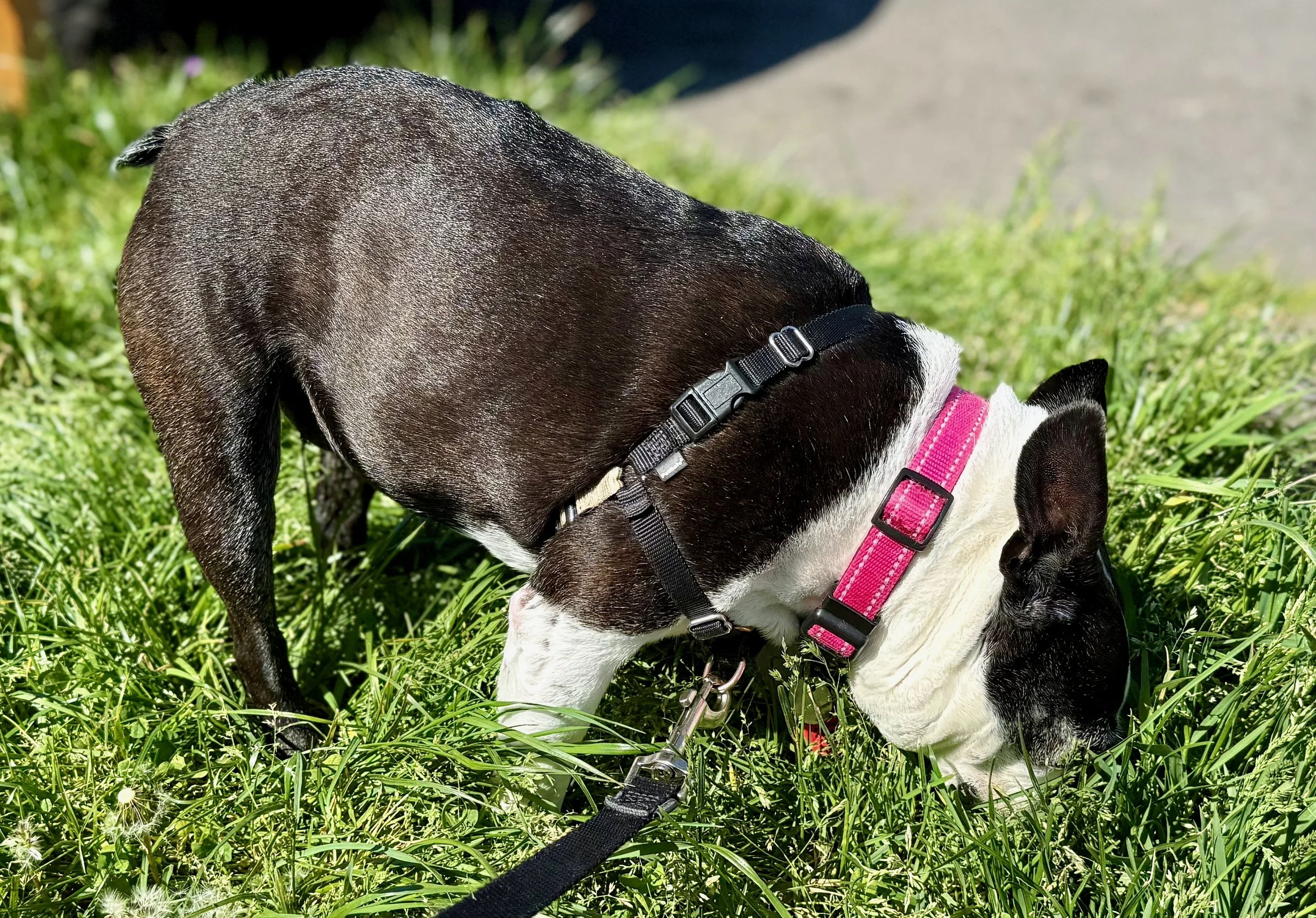
I’ve projected the same obsessions onto Lilly, our 13-year-old Boston terrier. She gets lengthy walks, ferrets out treat puzzles, and can identify a named toy from a group of three about half of the time.
Despite wanting the best for her, I’ve found my patience tested when Lilly lingers at puddles, fire hydrants, or by our neighbor’s feet. Walks have gradually become “snalks” (sniff + walk), with irresistible scents stopping us every few steps.
What I hadn’t realized: when Lilly sniffs, she’s giving her brain a workout. Sniffing in older dogs boosts brain health, strengthens memory, and reduces stress. Just twenty minutes of sniffing equals an hour-long walk for mental exercise, activating multiple, interconnected brain systems.
A regular sniffing routine in dogs has been linked to the delayed onset of Canine Cognitive Dysfunction (CCD). Sniffing promotes neuroplasticity, allowing the brain to generate new neural pathways that compensate for atrophy.
Specifically, sniffing activates the olfactory bulb (the part of the brain for the sense of smell) and the frontal cortex, including the limbic system, which are important for memory, decision-making, and controlling emotions. The autonomic system, which controls automatic body functions like heart rate and breathing, is also enhanced. Sniffing helps calm anxiety symptoms such as panting and pacing.
Dr. Karen Becker, a noted advocate of pet wellness, wrote, “Sniffing on walks, play sessions, problem-solving games . . . these aren’t just cute—they’re neuroscience in action . . . you’re not just stretching legs and emptying bladders —you’re building brain power.”
A dog’s sense of smell is vastly superior to a human’s. Some dogs can sniff 10 times per second, and constant nasal reconnaissance generates greater engagement and tiredness than pure physical exercise. A tired dog is a happy dog.
Sniffing routines:
Take their lead. We may have an agenda that’s not necessarily our dog’s. Enticing ground may lie in the opposite direction today as it did yesterday and may be enjoyed at an even slower pace.
Don’t pull! Nothing annoys dogs more than a human denying their aromatic pleasures. This is our dog’s time. They’re on “sniffari!” If we want an aerobic walk, perhaps we should do it sans our senior dog.
Schedule a “sniffcation.” Novel smells in a new place will fire a flurry of doggie synapses! Be careful to avoid areas with toxic plants (e.g., daffodils) and steer clear of rotting animal carcasses.
Fido the Forager. Try laying kibble or high-value treats on the grass to encourage natural foraging. At home, hide treats in favorite blankets or toys and place them in unusual spots.
Note to self: It seems that the way to Lilly’s heart—and her brain—is through her nose.