

When night terrors shook my childhood bed, my grandma calmed me with stories about “The Old Country.” How dawn struck the olive groves and that people always smiled “before de bombs come.”
“I want to go someday,” I told her. “But I’m scared.”
“Why?”
“I won’t know anyone!”
“Don’t be e-scary,” she said. “Strangers today. Friends tomorrow.”
Fast forward sixty-five years. My wife and I take an Eastern Mediterranean cruise that ends just miles from my ancestral roots in Türkiye. How would I greet the locals? Grandma had taught me slang that could spark a brawl. Not exactly the way to make friends!
Before each shore excursion, our English-speaking guides review a few native greetings. They assure us that delightful language tutors await us in every port. The passengers sigh in relief.
Our bus driver parks and we scan the sidewalks for our warm handoff. The driver exits the bus, dips his hand into his pocket, and pulls out a pouch of soft cat food. He tears open the pouch and empties its contents into a bowl. To the passengers' awe, a gray tabby streaks over and gobbles the food. Such was our first lesson in the universal language of love.
Other lessons follow. In the courtyard of Ephesus’ Archaeological Museum, another gray tabby hopped onto a bust and leaned into my wife’s arm as if she always belonged there. At the gates of Troy—where Achilles met his end—a short-haired hound sunning on a rock nuzzled my hand. More cats and dogs laze upon cafe awnings, the parapets of walled cities, and the warm planks leading to ruins of past civilizations. Each animal greeter wears a lush coat, clear eyes, and an unmistakable smile.
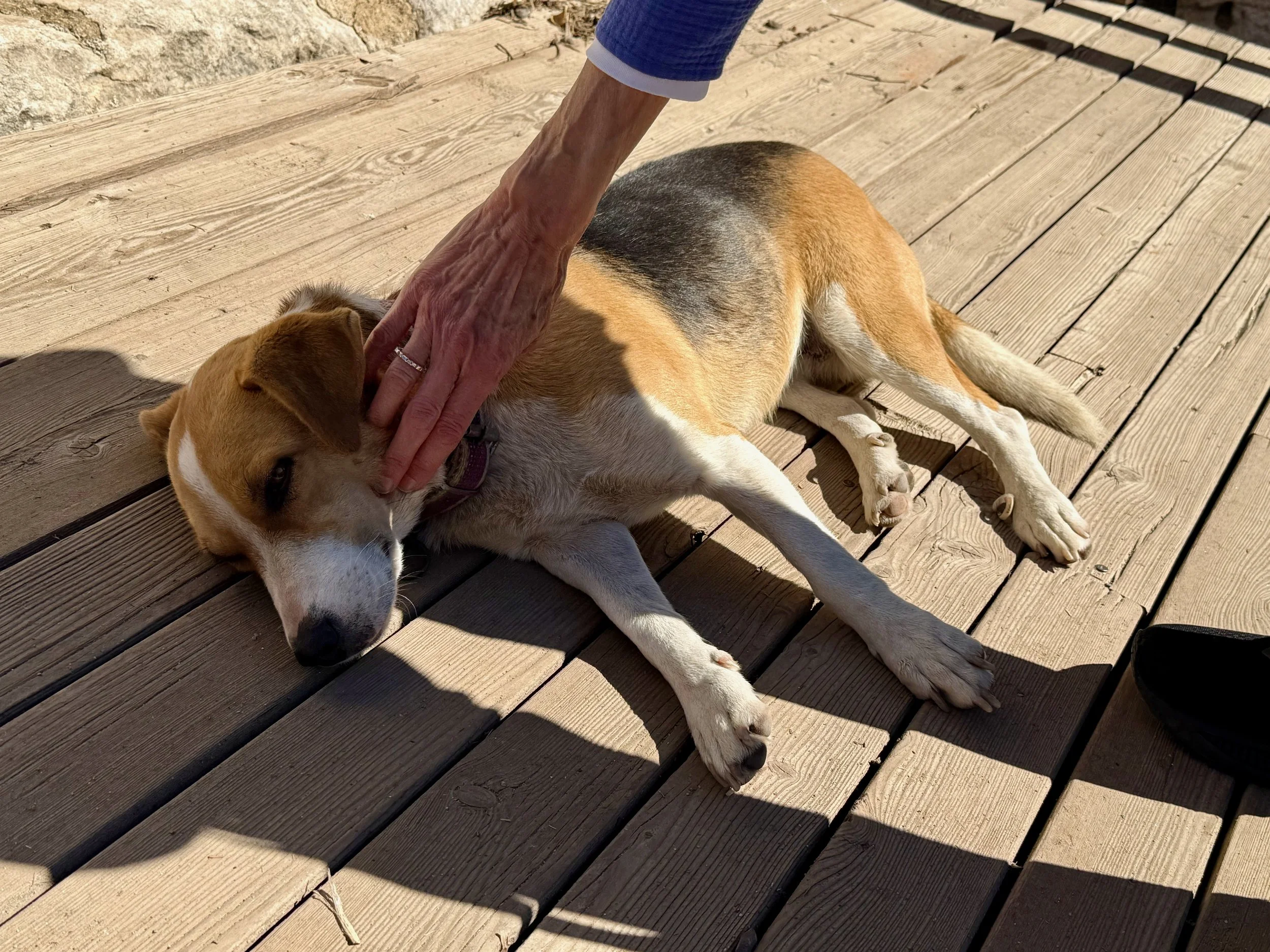
Ephesus, Türkiye.
Who are these animals? Who cares for them?
Our tour guide tells us they are the dogs and cats who belong to no one—and everyone. Village “strays” quick with cuddles, licks, and purrs for all comers—living Master Classes in the art of trust.
“Caring for stray animals is embedded in Eastern Mediterranean cultures and values,” the guide explains. “From the individual shopkeeper to government officials, everyone has a hand in animal welfare.”
We learn how local tavernas, bakeries, and homeowners frequently feed cats and dogs roaming the neighborhood. Some residents build small shelters or weave custom beds and place food and water bowls in public squares, alleys, and shaded areas.
Volunteers and grassroots groups help fill gaps in historically underfunded animal services. In Greece, groups like Artamiti in Epidavros, the Kalymnos Cat Project, and Catopia Rhodes monitor local stray populations. They set up organized feeding stations to sustain animals through winter, when tourists and tavernas disappear. Turkish communities enlist local networks to monitor street animals and communal feeding systems. Animal Rescue Cyprus runs extensive, donation-funded rescue and 24/7 emergency operations to help abused or dumped animals.
International donors fund large-scale veterinary care, population control, and rehoming efforts. Animal Action Greece and Germany’s Arche Noah Kreta fund mobile veterinary pools to perform thousands of Trap-Neuter-Vaccinate-Return (TNVR) procedures annually. Syros Cats/God's Little People Cat Rescue on the Greek island of Syros offers international volunteers free housing and utilities in exchange for daily hands-on care of the island's strays. Friends of the Strays of Greece and Greek Stray ResQ facilitate international adoptions, flying dogs and cats to permanent homes across the UK, the Netherlands, and Germany.
Legal frameworks such as Greece’s Law No. 4830/2021 mandate local municipalities to provide microchipping, neutering, and care programs. To address gaps in rural enforcement, organizations like the Zero Stray Academy offer free training to Greek municipalities and thousands of frontline police officers on proper stray animal prevention and management. In Türkiye, municipal vets frequently tag street dogs, signaling to village communities that the animal has been vaccinated and monitored.
For my wife and me, the most precious gift wasn't in Istanbul’s Grand Bazaar. It was a cat treat vending machine on its outskirts.
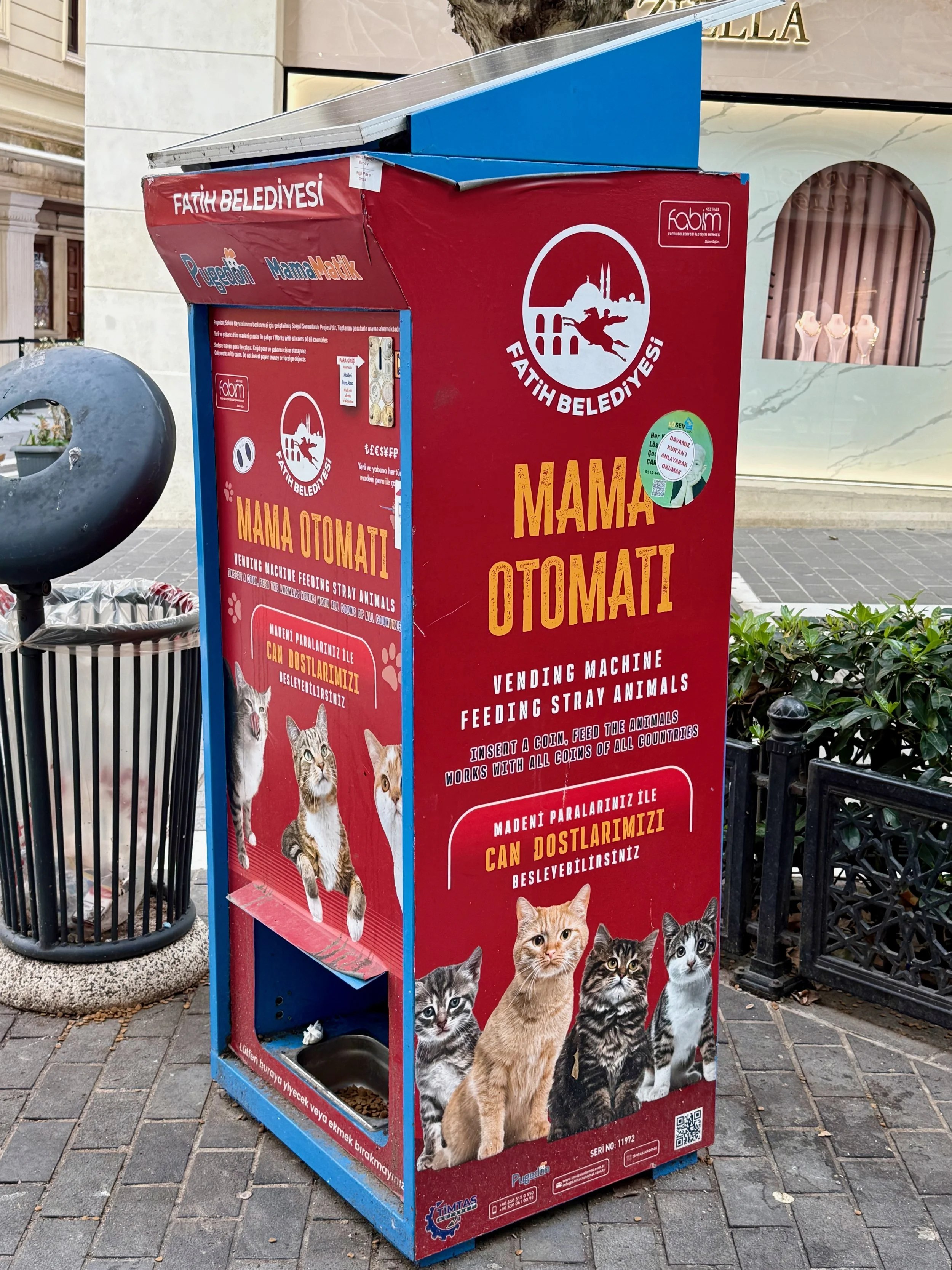
“Automatic Mama” cat food vending machine, Istanbul, Türkiye.
Eastern Mediterranean cultures have clashed for millennia. One mission unites them: keeping stray cats and dogs safe, nourished, and connected to their communities.
As I return home, I think about Grandma and how she made new friends in America.
“We all need to take care of each other,” she told me.